
Gastroenterology · August 23, 2026 · 11 min read
Gallstones: Symptoms, Causes and Treatment Options
By Dr. Vikas Sengar
Key takeaways
- Gallstones are hardened deposits of digestive fluid that form in the gallbladder, ranging in size from sand grains to golf balls.
- Primary symptoms include biliary colic—sudden, severe pain in the upper right abdomen that may radiate to the back or shoulder.
- Risk factors include metabolic factors, diet, rapid weight loss, and the classic clinical categories (female, age forty, obesity).
- Symptomatic gallstones require surgical gallbladder removal (cholecystectomy), while bile duct stones are cleared via ERCP.
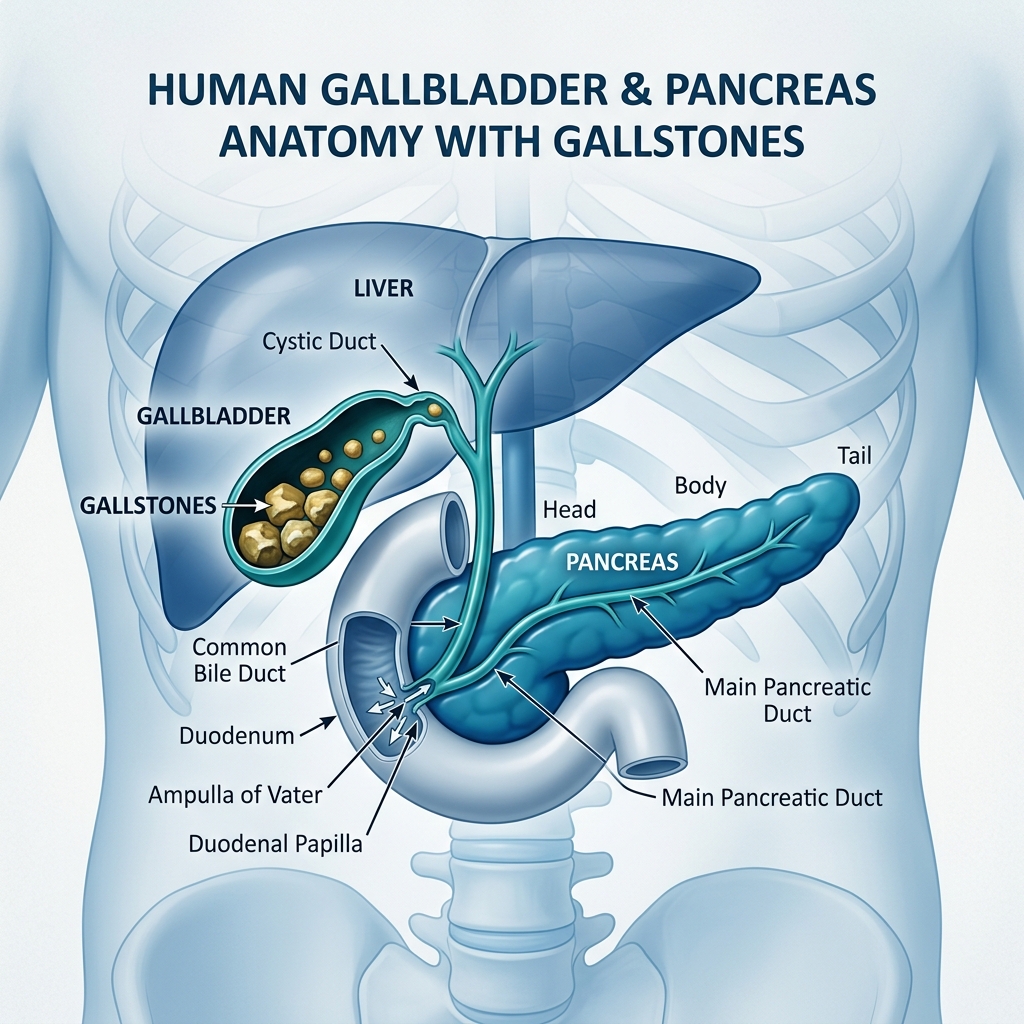
The gallbladder is a small, pear-shaped organ located just beneath your liver on the right side of your abdomen. While it is not an organ you think about daily, it plays an important role in your digestive system by storing and concentrating bile—a digestive fluid produced by the liver that helps break down fats. Problems arise when this fluid hardens, forming crystalline deposits known as gallstones (cholelithiasis). In Kanpur, metabolic conditions, high-calorie or fat-rich diets, rapid weight fluctuations, and genetic factors make gallstones a very common clinical complaint. Many individuals live with gallstones for years without realizing it, as the stones often cause no symptoms. However, when a gallstone blocks the flow of bile, it can trigger intense, sudden pain and lead to severe complications. Understanding the causes, symptoms, and treatment options is key to preventing emergencies. If you are experiencing concerning symptoms, finding expert gallstones treatment in Kanpur under the guidance of a leading gastroenterologist in Kanpur is essential. In this patient-friendly guide, we will discuss how gallstones form, outline their symptoms and causes, discuss potential complications, and explain the surgical and non-surgical treatment options.
How Do Gallstones Form?
Gallstones develop when the chemical composition of the bile stored in the gallbladder becomes imbalanced. Bile is made of water, cholesterol, bile salts, bilirubin, and lecithin. Gallstones form primarily through two pathways, resulting in different types of stones:
- Cholesterol Gallstones: The most common type, accounting for about 80% of cases. They form when the liver excretes more cholesterol than the bile can dissolve. This excess cholesterol crystallizes, slowly growing into stones over time. They are yellow-green in color.
- Pigment Gallstones: These are smaller, dark brown or black stones. They form when the bile contains too much bilirubin (a waste product from red blood cell breakdown). This is more common in patients with blood disorders, liver cirrhosis, or biliary infections.
Additionally, if the gallbladder does not empty its contents completely or frequently enough, the bile can become highly concentrated (gallbladder sludge), which promotes stone formation.
Common Symptoms of Gallstones
Many patients have "silent gallstones," which do not cause pain or interfere with digestion and are often discovered during routine abdominal ultrasounds. However, if a stone moves and blocks a bile duct, it triggers symptoms known as biliary colic:
Key Symptoms of a Gallstone Attack
- Sudden, Intense Pain: A sharp, severe pain in the upper right quadrant of the abdomen, just below the ribs. The pain can build quickly and last from 30 minutes to several hours.
- Radiating Pain: The pain often spreads (radiates) to the back, between the shoulder blades, or specifically to the right shoulder.
- Nausea and Vomiting: Often accompanying the pain due to abdominal pressure and nerve irritation.
- Triggered by Meals: Attacks frequently occur in the evening or at night, particularly after eating a heavy, high-fat meal that stimulates the gallbladder to contract.
Unlike simple gas or indigestion pain, the discomfort of a gallstone attack is constant and is not relieved by passing gas, having a bowel movement, or changing body positions.
Risk Factors: Who Is Most Likely to Develop Gallstones?
Gastroenterologists use a classic clinical mnemonic—the "4 F's"—to outline the demographic most at risk for cholesterol gallstones, though anyone can develop them:
- Female: Women are twice as likely to develop gallstones as men, because estrogen stimulates the liver to secrete excess cholesterol into the bile.
- Forty: The incidence of gallstones increases significantly after the age of 40, as gallbladder motility slows.
- Fat (Obesity): Carrying excess body weight increases cholesterol levels in bile and reduces gallbladder emptying.
- Fertile: Pregnancy, oral contraceptives, or hormone replacement therapy increase estrogen levels, raising the risk.
Other risk factors include having diabetes, rapid weight loss (which causes the liver to release extra cholesterol), a sedentary lifestyle, and a family history of gallstones.
Complications of Untreated Gallstones
If symptomatic gallstones are left untreated, the blockages can lead to severe and potentially life-threatening inflammatory conditions:
- Acute Cholecystitis: Inflammation of the gallbladder itself, caused when a stone permanently blocks the gallbladder neck. It triggers constant, severe pain, high fever, and chills, requiring urgent hospitalization.
- Common Bile Duct Obstruction (Choledocholithiasis): Occurs when a stone passes out of the gallbladder and blocks the common bile duct, preventing bile from leaving the liver. This causes obstructive jaundice (yellow eyes, dark urine, pale stools) and can lead to a dangerous bacterial infection of the bile ducts (cholangitis).
- Gallstone Pancreatitis: If a stone blocks the pancreatic duct (which merges with the common bile duct), it stops pancreatic enzymes from flowing, causing acute, severe inflammation of the pancreas, requiring immediate intensive care.
How Gallstones Are Diagnosed
To confirm the presence of gallstones and screen for complications, a gastroenterologist will recommend:
- Abdominal Ultrasound: The most sensitive and non-invasive test to visualize the gallbladder and identify stones, sludge, or signs of inflammation.
- Blood Tests: To check for signs of infection (elevated white blood cells), liver function (LFT) abnormalities, or pancreatic enzyme elevations (amylase and lipase).
- MRCP (MRI scan): To obtain high-resolution images of the bile ducts if the doctor suspects a stone has slipped into the common bile duct.
Treatment Options for Gallstones
Treatment depends entirely on whether the stones are causing symptoms or complications:
1. Asymptomatic (Silent) Gallstones
If gallstones are found during an ultrasound for another condition and have never caused pain, treatment is generally not recommended. The risk of developing symptoms is low, and "watchful waiting" is the standard approach. Lifestyle changes, like a low-fat diet, are advised.
2. Symptomatic Gallstones: Surgery (Cholecystectomy)
Once gallstones begin to cause painful attacks, they will likely continue to do so. The gold standard and only definitive treatment is surgical removal of the gallbladder, a procedure called a cholecystectomy. Modern surgery is performed laparoscopically (keyhole surgery), using tiny abdominal incisions and a camera. Laparoscopic cholecystectomy is a safe, routine procedure with quick recovery, allowing patients to return home within 24 to 48 hours. *Life after Gallbladder Removal:* Because the gallbladder only stores bile, you do not need it to live. After surgery, bile flows directly from your liver into the small intestine. Digestion is maintained, though minor dietary adjustments (limiting very fatty foods) are advised initially.
3. Common Bile Duct Stones: ERCP
If a stone has slipped into the common bile duct, it must be removed. This is done endoscopically using ERCP (Endoscopic Retrograde Cholangiopancreatography). A specialist guides a scope through the mouth into the duodenum, accesses the bile duct, extracts the stone using tiny baskets, and restores bile flow. The patient then undergoes gallbladder surgery at a later date to prevent future blockages.
Role of Dr. Vikas Sengar: Gallstone Specialist in Kanpur
For patients requiring advanced diagnostic and therapeutic care for gallstones in Kanpur, Dr. Vikas Sengar offers highly specialized clinical services. Practicing at Medi Help Hospital, Sarvodaya Nagar, Kanpur, Dr. Sengar provides comprehensive evaluations.
With a DM in Gastroenterology from SGPGI Lucknow and over 10 years of clinical experience, Dr. Sengar is an expert in interventional biliary endoscopy. While surgical gallbladder removals are performed by qualified laparoscopic surgeons, Dr. Sengar plays a critical role in diagnosing complex cases, performing advanced ERCP procedures to extract stones from the common bile duct, and managing post-operative recovery, ensuring patient safety and optimal clinical outcomes.
Frequently Asked Questions (FAQs)
Q1: Can gallstones be dissolved with medicine or diet?
While certain oral bile acid medications can theoretically dissolve small cholesterol stones, they are rarely used. The process takes months or years, is only successful in a minority of patients, and the stones almost always recur once the medication is stopped. Surgery is the only definitive treatment for symptomatic stones.
Q2: What is the difference between kidney stones and gallstones?
Kidney stones form in the urinary tract (kidneys, ureters) due to crystallized mineral salts (like calcium) and cause pain in the flank or groin, often with blood in the urine. Gallstones form in the digestive tract (gallbladder) from cholesterol or bilirubin and cause upper right abdominal pain, nausea, and indigestion.
Q3: Will gallbladder removal cause chronic diarrhea?
Most patients do not experience chronic diarrhea after a cholecystectomy. Some may have temporary loose stools for a few weeks after surgery as their digestive tract adjusts to the constant trickle of bile from the liver. This usually resolves with a temporary low-fat diet.
Q4: Can I live a normal life without a gallbladder?
Yes. The gallbladder is not an essential organ. Its primary function is storage, and without it, the liver continues to produce bile. You can eat a normal diet, digest food effectively, and live a healthy, full life after gallbladder surgery.
Q5: What is the cost of gallstone surgery in Kanpur?
The cost of a laparoscopic cholecystectomy in Kanpur varies depending on the hospital facility, length of stay, and surgical complexity. At Medi Help Hospital, we offer transparent billing packages. Please contact our reception desk for a detailed financial estimate.
Conclusion & Consultation
Symptomatic gallstones can cause severe pain and lead to dangerous complications if ignored. Relying on alternative therapies to "dissolve" stones can delay necessary treatment. Book a consultation with Dr. Vikas Sengar for evaluation of digestive and liver-related concerns at Medi Help Hospital in Sarvodaya Nagar, Kanpur. To schedule your visit, call +91 98398 00199 or visit our online appointment booking portal.